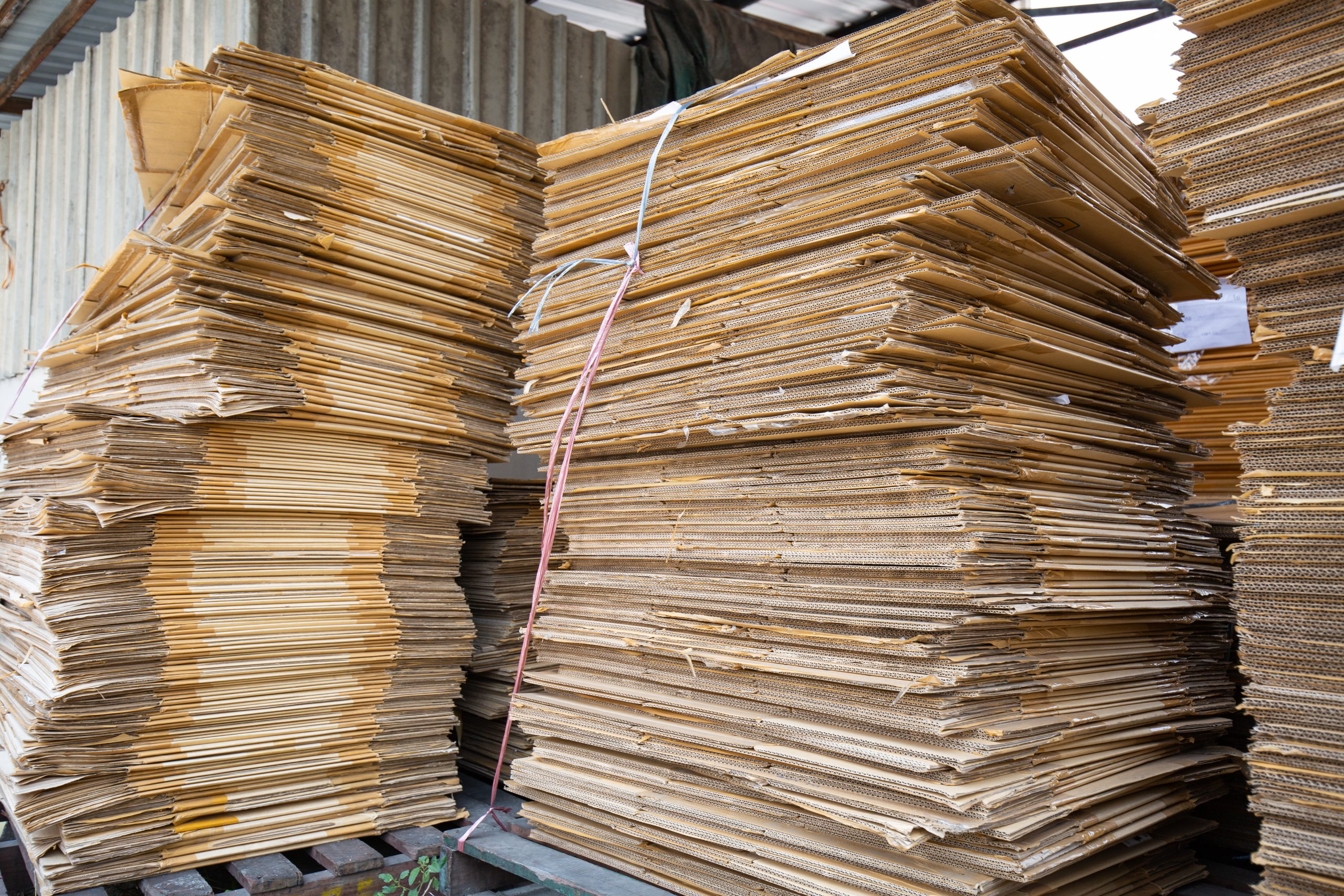
OCC (Old Corrugated Containers) refers to used, recyclable corrugated cardboard boxes, typically featuring a fluted inner layer between two linerboards. With a recycling rate exceeding 90% in many regions, it is a highly recycled material used to produce new packaging, making it a key component of the circular economy.
Key Characteristics and Benefits
Recycling and Handling
Specifications
| Structure | Comprised of unbleached, unwaxed corrugated fiberboard (kraft paper), providing strength, durability, and cushioning. |
|---|---|
| Sustainability | Fully recyclable and biodegradable, with fibers that can be reused 5-7 times. |
| Efficiency | Lightweight yet rigid, offering structural integrity and insulation for shipping. |
| Cost-Effective | Often cheaper than virgin fiber alternatives, supporting sustainable business practices. |
| Preparation | Boxes should be flattened and kept dry to prevent weakening, which lowers quality. |
| Contamination | Contaminants like Styrofoam, plastics, and food residue (especially grease) must be removed. |
| Processing | Collected OCC is sorted, baled, and transported to mills, where it is pulped, cleaned, and processed into new paper products. |